





ISPM 15 Pallet Requirements: 5 Rules for Export Compliance
ISPM 15 pallet requirements are important for industries involved in export packaging, international logistics, warehouse transportation, and global shipment handling. Export businesses using wooden packaging materials must comply with international heat treatment regulations to avoid customs rejection, shipment delays, and export compliance issues.
ISPM 15 compliant wooden pallets help industries maintain safer international transportation standards while improving shipment approval during customs inspections. Heat treated export pallets are commonly used for industrial machinery, engineering products, chemicals, pharmaceuticals, warehouse cargo, and heavy-duty export shipments.
International shipping regulations require export pallets to undergo approved heat treatment procedures and carry proper IPPC HT stamp markings before export dispatch.
1. What Are ISPM 15 Pallets?
ISPM 15 pallets are wooden packaging materials treated according to international phytosanitary regulations designed for export transportation and global shipping operations.
The International Standards for Phytosanitary Measures No. 15 establishes rules that help prevent the spread of harmful pests and wood contamination during international trade movement.
- Used in international shipping
- Required for export packaging
- Supports customs clearance
- Improves global trade compliance
2. Why ISPM 15 Pallet Requirements Matter for Export Shipping
Following ISPM 15 pallet requirements is important because many countries strictly inspect wooden packaging materials before approving international shipment entry.
Non-compliant pallets may create customs issues, cargo rejection, shipment quarantine, or additional treatment costs at destination ports.
- Reduces customs rejection risk
- Improves export shipment approval
- Supports international compliance
- Prevents shipping delays
Many exporters prefer heat treated pallets for safer global transportation and export packaging operations.
3. Heat Treatment Rules for ISPM 15 Pallets
Export wooden pallets must undergo approved heat treatment procedures before international shipment usage. During heat treatment, wood is heated to required temperatures for a specific duration to eliminate harmful pest contamination risks.
Proper heat treatment helps maintain international shipping safety and export packaging compliance.
| Requirement | Description |
|---|---|
| Heat Treatment | Wood heated to approved export standards |
| HT Marking | Mandatory export compliance stamp |
| Certified Facility | Treatment by approved provider |
| Export Approval | Required for global shipping |
Industrial exporters should always ensure that pallets are treated by approved facilities before export dispatch.
4. Understanding IPPC HT Stamp Marking Requirements
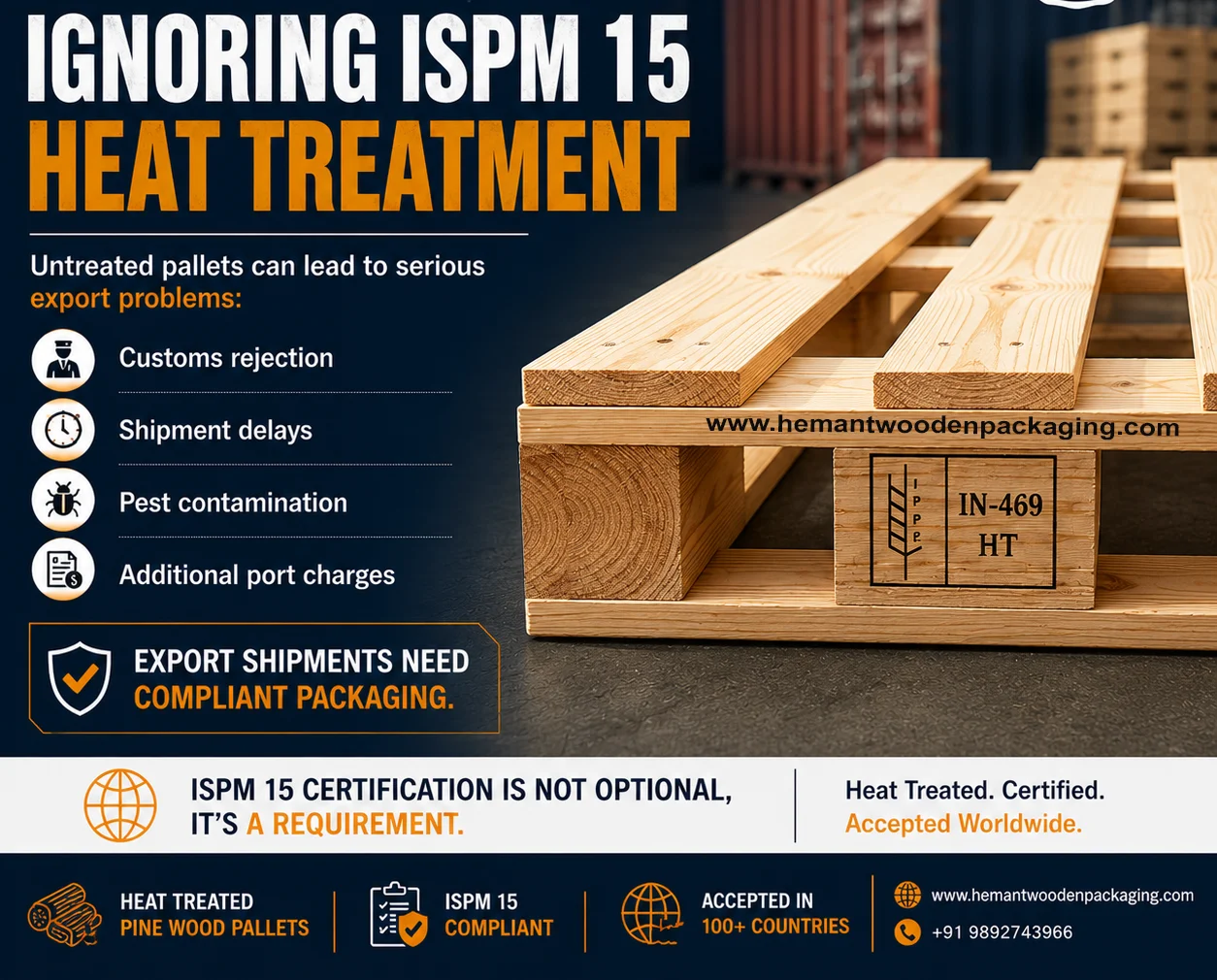
Every ISPM 15 compliant pallet must contain a visible IPPC HT stamp marking that confirms the pallet has undergone approved heat treatment procedures.
The export marking generally includes country identification, treatment provider code, and HT certification details used during international customs verification.
- Confirms export compliance
- Supports customs inspection
- Required for international shipment
- Verifies heat treatment approval
Export businesses should always verify stamp visibility before loading cargo for international transportation.
5. Common Export Problems Caused by Non-Compliant Pallets
Using untreated wooden pallets may create major export shipment issues during customs inspection procedures.
Non-compliant export packaging materials can lead to shipment rejection, quarantine action, transportation delays, cargo detention, and additional export treatment costs.
- Shipment rejection risks
- Export transportation delays
- Additional operational expenses
- Customs clearance complications
6. Industries That Require ISPM 15 Export Pallets
Many industrial sectors use ISPM 15 compliant pallets for export packaging and international transportation operations.
- Engineering industries
- Machinery manufacturers
- Chemical exporters
- Warehouse logistics companies
- Pharmaceutical industries
- Automotive component exporters
Export industries handling global shipments commonly prefer certified export packaging systems for safer transportation compliance.
7. Choosing Reliable ISPM 15 Compliant Pallet Manufacturers
Selecting experienced export pallet manufacturers helps industries maintain better compliance standards and safer export packaging operations.
Professional pallet manufacturers provide certified heat treated pallets, proper HT marking systems, durable pallet structures, and industrial-grade export packaging solutions.
Many industries choose ISPM 15 compliant pallet manufacturers for safer international transportation support and export packaging reliability.
- Certified treatment process
- Proper HT marking standards
- Industrial-grade pallet quality
- Reliable export packaging support
Benefits of Using ISPM 15 Compliant Export Pallets
ISPM 15 export pallets provide multiple operational advantages for industries involved in international transportation and warehouse logistics.
- Improves export compliance
- Reduces customs inspection risks
- Supports safer shipment handling
- Improves warehouse transportation efficiency
- Enhances international trade reliability
Export-compliant wooden pallets help industries maintain smoother logistics operations while reducing transportation interruptions during global shipment handling.
Conclusion
ISPM 15 pallet requirements play an important role in export packaging, international transportation, customs compliance, and industrial shipment safety. Proper heat treatment, approved HT marking, and certified export packaging systems help businesses achieve smoother global shipment movement and reduce transportation risks.
Industries involved in international trade should always use certified export pallets to improve shipment approval, avoid customs rejection, and maintain safer industrial logistics operations.
For official international export packaging regulations, refer to the official ISPM 15 international packaging guidelines.