





1. What Are Wooden Pallets?
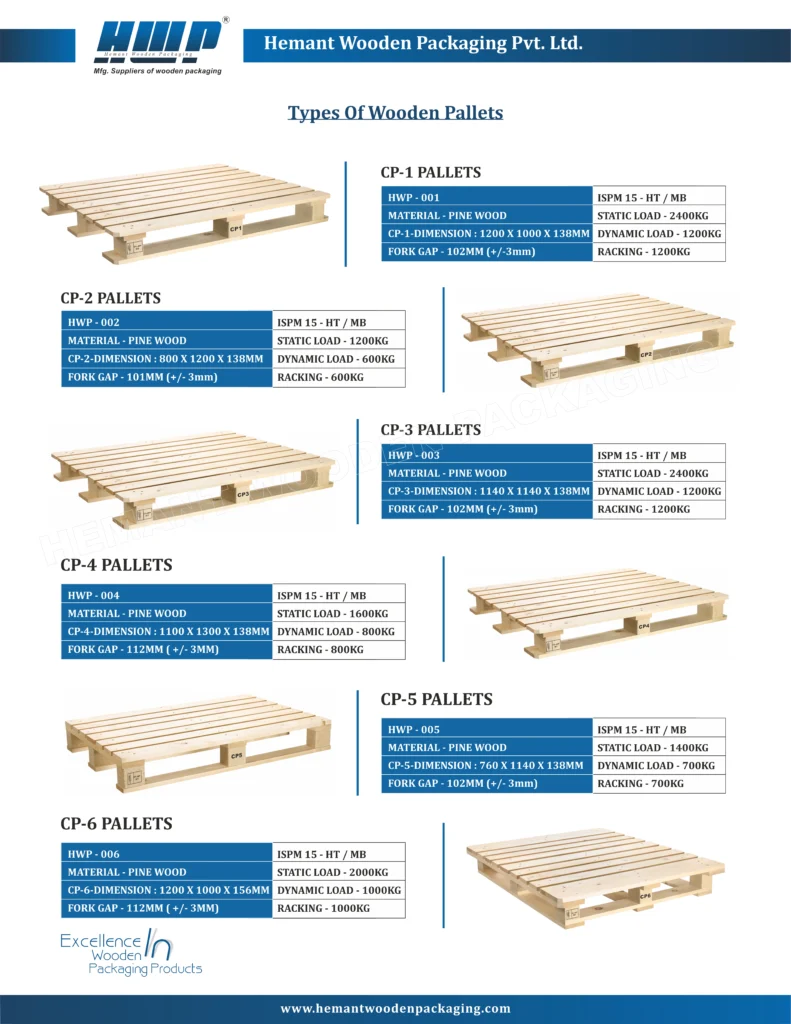
Wooden pallets are flat transport structures used for supporting industrial goods during warehouse storage, forklift movement, export transportation, and logistics handling operations.
Industrial pallets help improve cargo stability while reducing manual handling risks during transportation and warehouse operations.
- Supports material handling
- Improves warehouse efficiency
- Enhances load stability
- Reduces transportation damage
2. Two Way Wooden Pallets for Industrial Handling
Two way pallets allow forklift entry from two opposite sides and are commonly used in industrial storage and warehouse transportation applications.
These pallets are suitable for industries handling medium-duty loads and simple warehouse movement operations.
- Simple pallet structure
- Suitable for warehouse stacking
- Cost-effective industrial solution
- Commonly used for local transportation
Many industries use two-way pallets for lightweight industrial packaging and internal warehouse handling operations.
3. Four Way Wooden Pallets for Warehouse Operations
Four way pallets allow forklift access from all four sides, improving warehouse movement efficiency and operational flexibility.
These pallets are widely used in modern warehouse systems and export packaging operations where faster handling is required.
- Improves forklift accessibility
- Supports warehouse automation
- Better load distribution
- Suitable for export handling
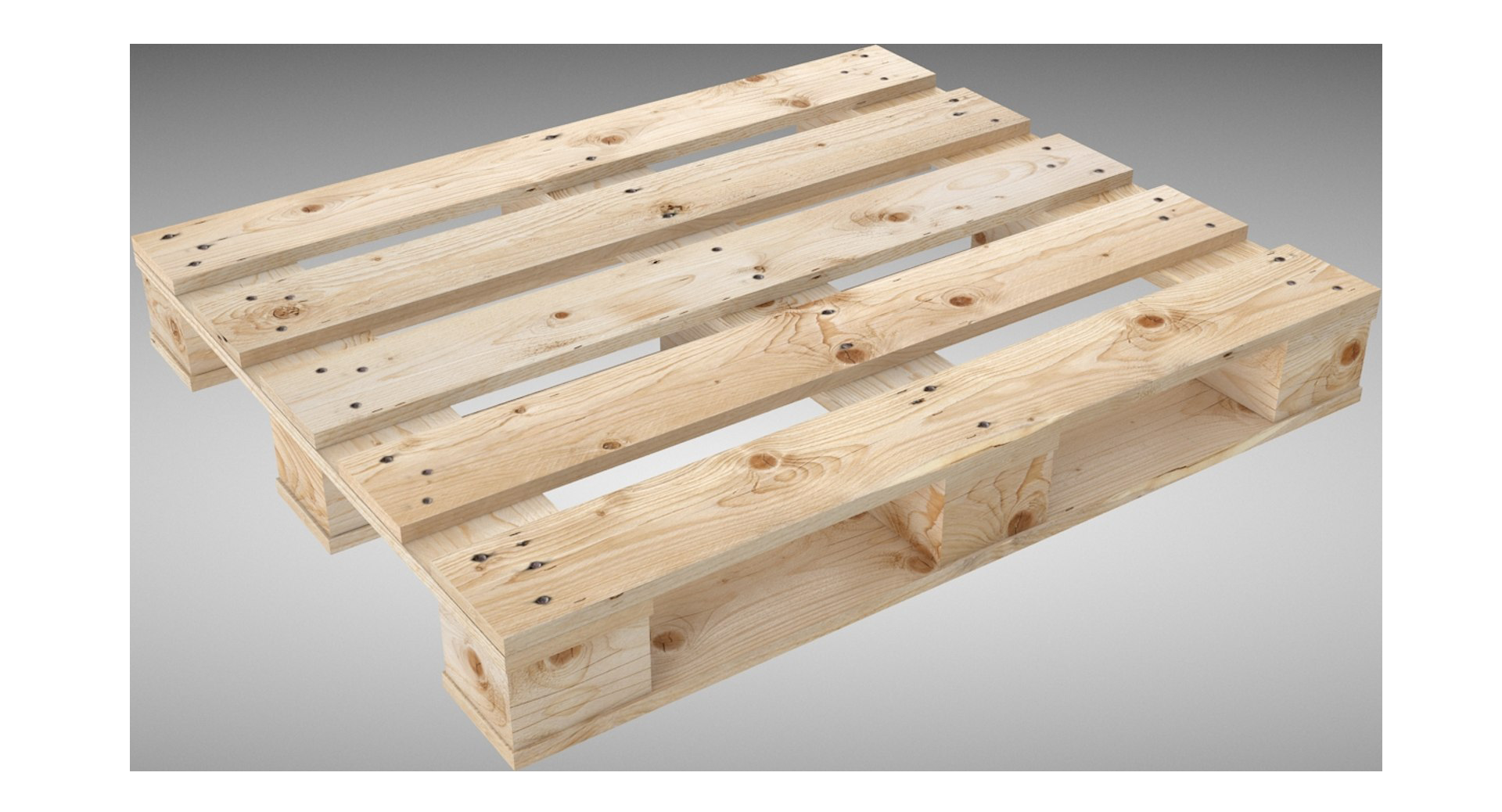
Industries handling heavy-duty cargo commonly prefer four-way pallet systems for improved warehouse operations.
4. Block Pallets vs Stringer Pallets
Block pallets use solid support blocks between the top and bottom deck boards, while stringer pallets use longitudinal support structures for load distribution.
| Pallet Type | Structure | Industrial Usage |
|---|---|---|
| Block Pallets | Solid support blocks | Heavy-duty warehouse handling |
| Stringer Pallets | Long wooden stringers | Medium industrial loads |
Both pallet structures are used in industrial packaging depending on load requirements and handling conditions.
5. Heavy Duty Wooden Pallets for Machinery Packaging
Heavy-duty pallets are designed for industrial machinery, engineering equipment, export cargo, and high-load transportation operations.
These pallets generally use thicker deck boards, stronger block structures, and reinforced support systems for improved load-bearing performance.
- Supports industrial machinery
- Improves heavy-load stability
- Suitable for export shipments
- Enhances transportation safety
Businesses often prefer wooden pallet manufacturers for custom heavy-duty pallet solutions according to industrial packaging requirements.
6. Heat Treated Export Pallets for International Shipping
Heat treated pallets are specially processed according to ISPM 15 export regulations for international shipment handling.
These pallets undergo approved heat treatment procedures and carry HT stamp markings required for export compliance.
- Supports export compliance
- Required for international shipping
- Reduces customs risks
- Improves export safety
Export industries commonly use heat treated pallets for global transportation operations.
7. Custom Size Wooden Pallets for Specialized Loads
Custom wooden pallets are designed according to product dimensions, machinery load requirements, and specialized industrial packaging conditions.
Industries handling non-standard cargo often require customized pallet dimensions for safer transportation and warehouse storage operations.
- Supports oversized cargo
- Improves load balance
- Optimizes warehouse storage
- Enhances transportation safety
Benefits of Choosing the Right Types of Wooden Pallets
Selecting the correct pallet type helps industries improve warehouse management, export safety, and material handling performance.
- Improves warehouse efficiency
- Enhances forklift handling
- Supports safer transportation
- Reduces product damage risks
- Optimizes industrial storage systems
Industrial pallet selection should always depend on product load, handling method, warehouse conditions, and transportation requirements.
Conclusion
Different types of wooden pallets are designed for specific industrial applications, warehouse operations, export handling, and heavy-duty transportation requirements. Understanding pallet structures helps industries select the correct pallet system for safer packaging and operational efficiency.
Businesses handling industrial cargo should evaluate pallet design, load capacity, handling methods, and warehouse conditions before selecting pallet systems for long-term industrial use.
For official export pallet regulations and international compliance standards, refer to the official ISPM 15 international packaging guidelines.