





Types of Wooden Packaging Used in Export Industries
Export shipments require more than just transportation. They require packaging solutions that can protect products from handling damage, moisture exposure, long transit durations, and international shipping conditions.
Different industries use different types of wooden packaging solutions depending on product weight, dimensions, destination country, and cargo protection requirements.
Quick Answer: The most commonly used types of wooden packaging in export industries include wooden boxes, wooden crates, skid packing, wooden pallets, plywood boxes, wooden base packing, VCI packaging, vacuum packaging, and container securing systems.
Why Wooden Packaging Is Preferred for Export Shipments
Wooden packaging continues to be one of the most trusted solutions for industrial exports because it provides strength, customization flexibility, and reliable cargo protection.
From heavy machinery and engineering equipment to fabricated structures and electrical panels, wooden packaging can be designed according to specific transportation and handling requirements.
Benefits of Wooden Packaging for Export
High Load Capacity
Suitable for heavy industrial equipment and machinery.
Custom Manufacturing
Can be manufactured according to cargo dimensions.
Cargo Protection
Reduces handling and transportation damage.
Export Ready
Compatible with international shipping requirements.
Easy Handling
Supports safe loading and unloading operations.
Industry Insight
No single packaging type is suitable for every export shipment. The right solution depends on the cargo, transportation route, handling method, and destination requirements. Understanding the available packaging options helps businesses reduce damage risks and improve export efficiency.

Main Types of Wooden Packaging Used in Export Industries
Export industries use different types of wooden packaging depending on the cargo size, product sensitivity, transportation method, and destination requirements.
Some packaging solutions focus on maximum protection, while others are designed for easier handling, cost efficiency, or oversized cargo transportation.
The most commonly used wooden packaging types include: Wooden Boxes, Wooden Crates, Skid Packing, Wooden Pallets, Plywood Boxes, Wooden Base Packing, VCI Packaging, Vacuum Packaging, and Container Securing Systems.
Export Packaging Comparison Table
| Packaging Type | Protection Level | Best Used For | Export Suitable |
|---|---|---|---|
| Wooden Boxes | High | Machinery & Equipment | ✔ Yes |
| Wooden Crates | Medium | Industrial Components | ✔ Yes |
| Skid Packing | High | Heavy Machinery | ✔ Yes |
| Wooden Pallets | Medium | Material Handling | ✔ Yes |
| Plywood Boxes | High | Export Cargo | ✔ Yes |
| Wooden Base Packing | Custom | Oversized Cargo | ✔ Yes |
Each packaging type serves a different purpose in industrial logistics. Understanding these differences helps businesses select the most suitable packaging solution for their export shipments.
Export Industry Insight
Most export shipments use a combination of packaging solutions rather than relying on a single packaging type. For example, heavy machinery may use wooden base packing, internal VCI protection, and external wooden boxing together.
1. Wooden Boxes for Export Packaging
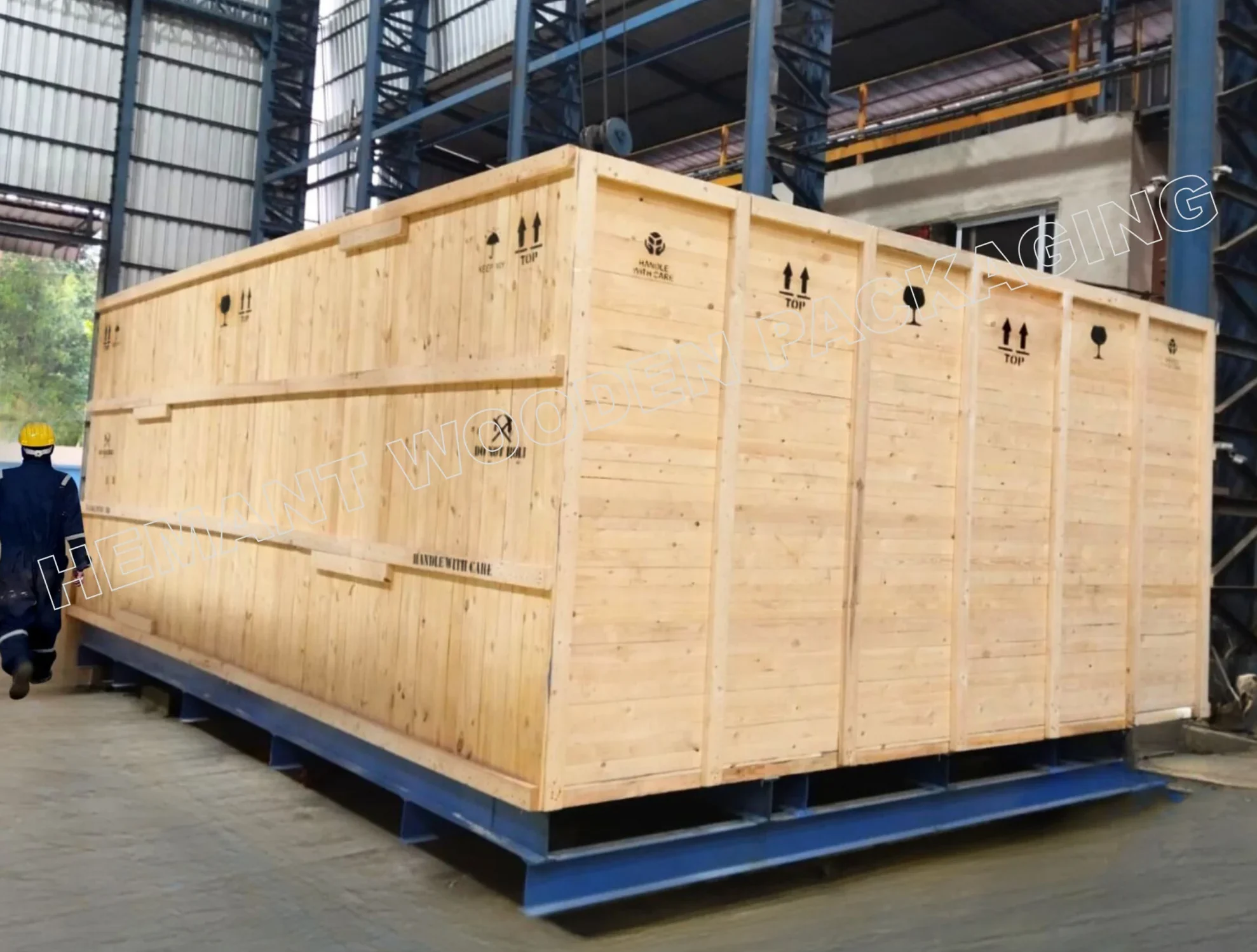
Wooden boxes are one of the most widely used packaging solutions in export industries. They provide complete enclosure and help protect products from external impact, handling damage, dust, and moisture exposure.
Industries dealing with machinery, engineering components, electrical panels, fabricated structures, and precision equipment frequently use wooden box manufacturers for customized export packaging requirements.
Unlike open packaging solutions, a wooden box provides better physical protection during loading, unloading, container stuffing, and long-distance transportation.
Applications of Wooden Export Boxes
Industrial Machinery
Heavy and precision equipment.
Electrical Panels
Protection from handling damage.
Engineering Components
Secure export transportation.
Export Cargo
Long-distance international shipping.
Wooden boxes are generally preferred when maximum protection and complete enclosure are required during export transportation.
2. Wooden Crates for Export Shipments
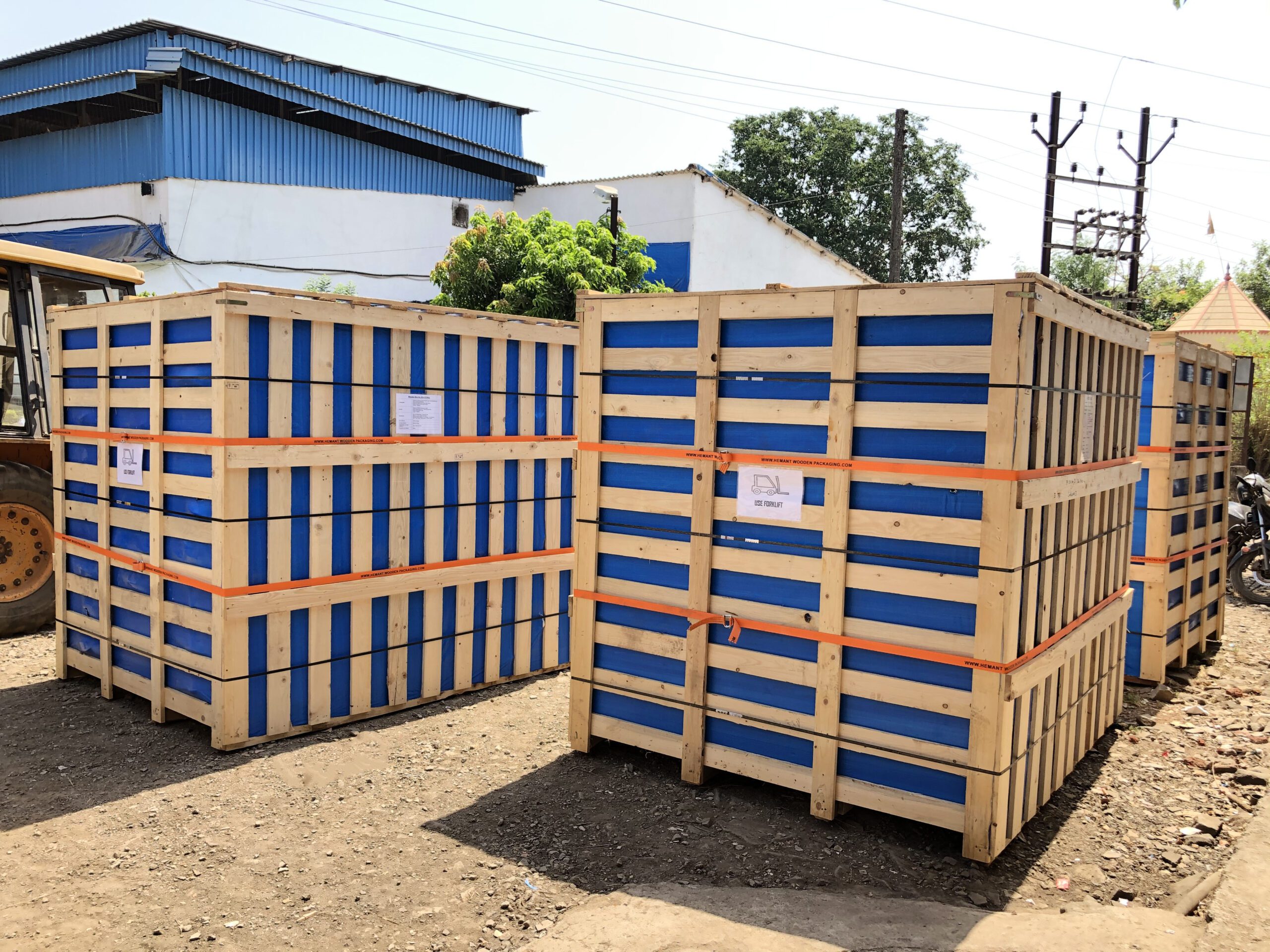
Wooden crates are another widely used export packaging solution, especially for products that require structural protection without complete enclosure.
Unlike wooden boxes, wooden crates feature an open framework design that provides strength while allowing visibility, ventilation, and easier inspection during logistics operations.
They are commonly used for industrial components, fabricated structures, pumps, motors, machine parts, and products that do not require fully enclosed packaging.
Wooden crates offer an excellent balance between protection, weight optimization, and transportation efficiency, making them popular for industrial exports.
Why Exporters Use Wooden Crates
Easy Inspection
Products remain partially visible during handling and customs checks.
Better Ventilation
Open design improves airflow around cargo.
Weight Efficient
Uses less material than fully enclosed wooden boxes.
Easy Handling
Suitable for loading, unloading, and warehouse operations.
Industries That Commonly Use Wooden Crates
Wooden crates are frequently used across engineering, automotive, fabrication, manufacturing, power generation, and infrastructure sectors.
Many exporters choose crates when the cargo requires strong structural support but does not need complete environmental isolation.
Common Export Applications
Fabricated Structures
Machine Components
Industrial Parts
Export Cargo
Industry Insight
Many exporters use wooden crates when product visibility, lower packaging weight, and inspection accessibility are more important than complete enclosure. The final choice depends on cargo sensitivity and transportation conditions.
3. Skid Packing for Heavy Machinery Exports
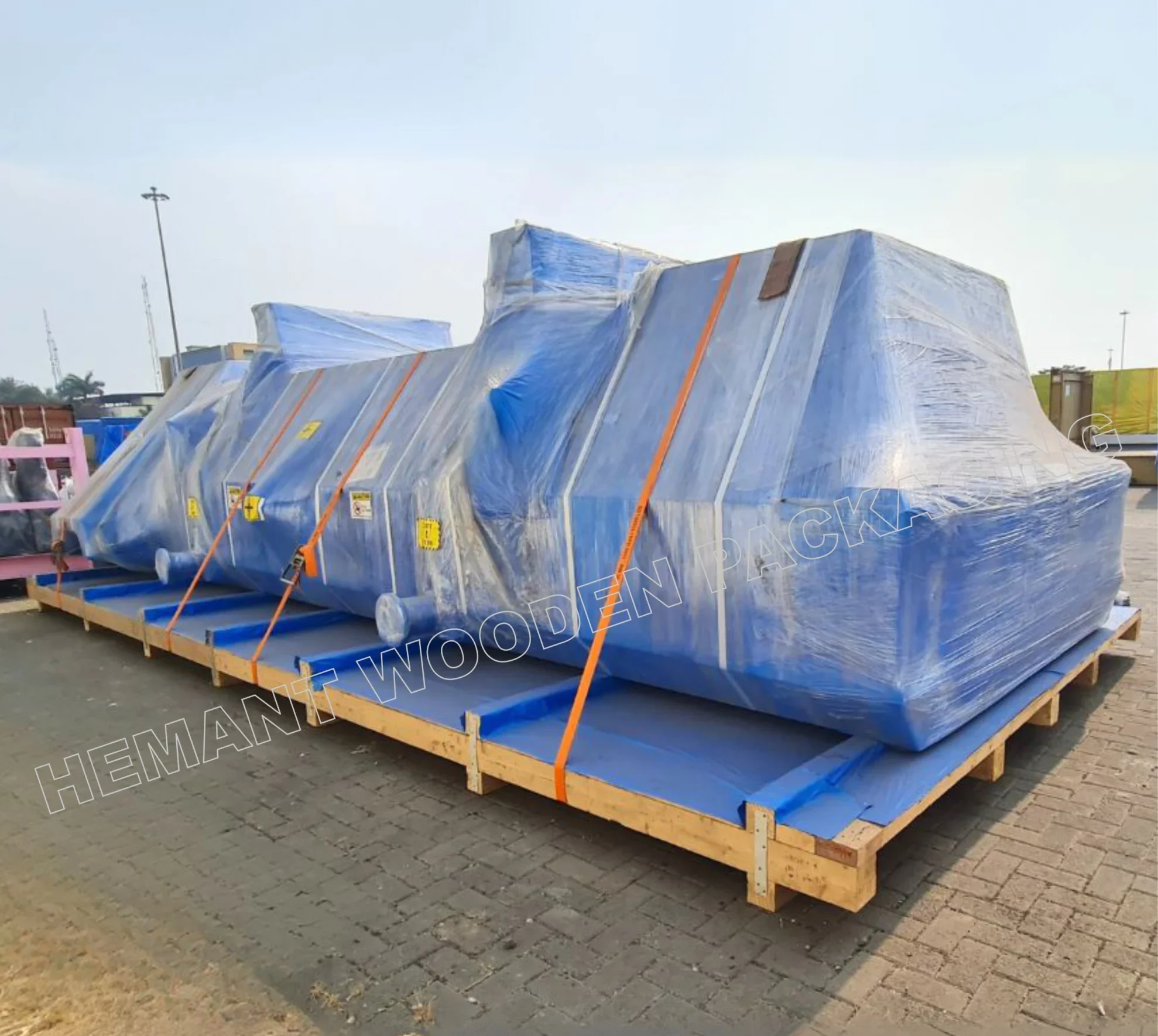
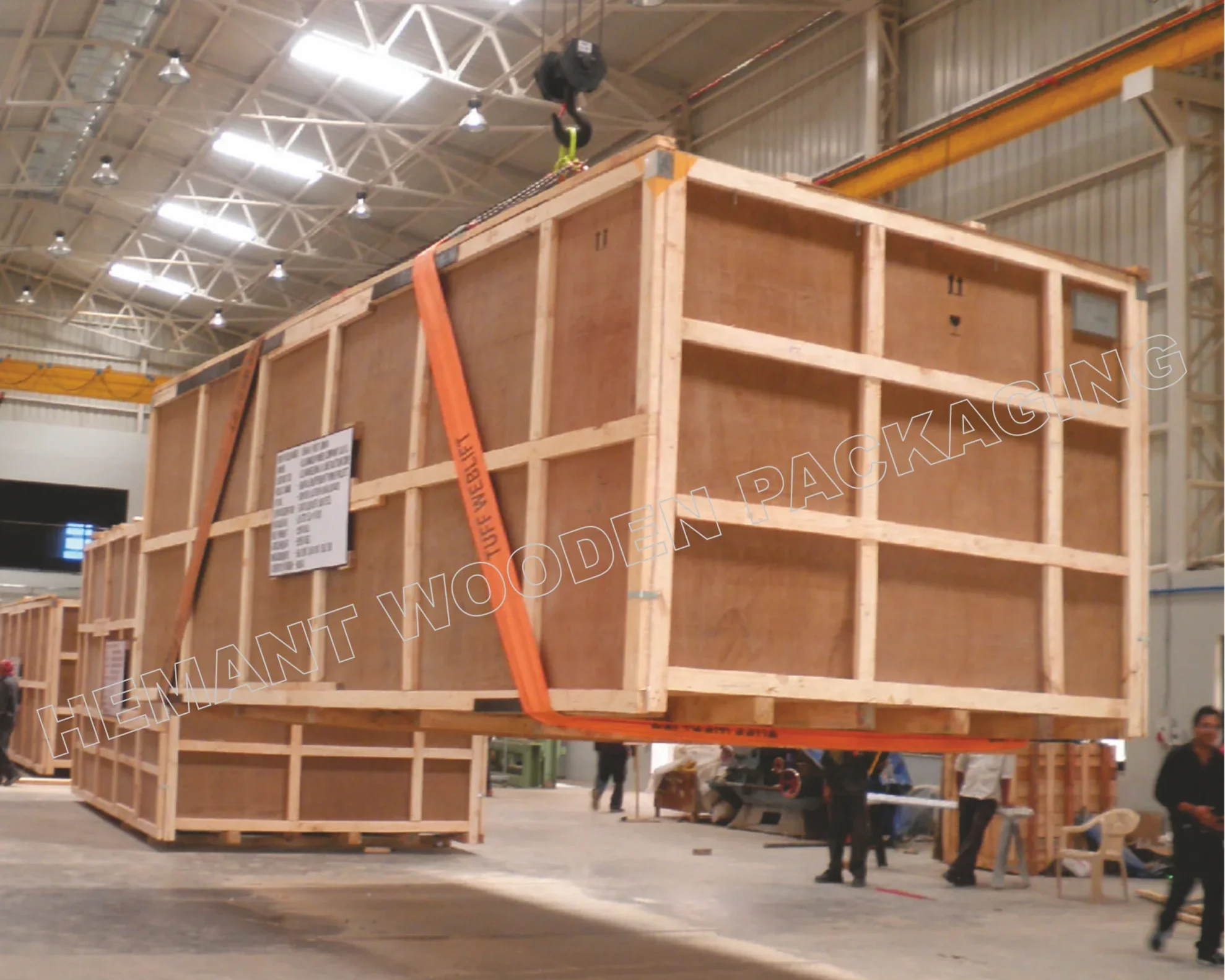
Not all export cargo requires fully enclosed packaging. Large industrial equipment, fabricated structures, turbines, compressors, and heavy machinery are often shipped using skid packing.
Skid packing provides a strong base platform that supports the cargo during lifting, transportation, and storage while allowing customized securing systems to be added based on project requirements.
This packaging method is widely used when the product dimensions are too large for conventional wooden boxes or crates.
Skid packing is commonly selected for oversized and heavy industrial cargo where handling efficiency is more important than complete enclosure.
Advantages of Skid Packing
Heavy Load Support
Designed for high-capacity industrial cargo.
Oversized Equipment
Suitable for large machinery and structures.
Easy Handling
Supports forklift and crane operations.
Custom Securing
Can include blocking, bracing, and lashing systems.
Where Skid Packing Is Commonly Used
Heavy manufacturing industries frequently use skid packing for export shipments involving production machinery, industrial assemblies, pressure vessels, fabricated structures, and process equipment.
Many companies combine skid packing with heavy machinery packaging solutions to improve cargo stability during long-distance transportation.
Typical Export Cargo Packed on Skids
Industrial Machinery
Fabricated Equipment
Electrical Assemblies
Project Cargo
Industry Insight
For many heavy machinery exports, skid packing offers the best balance between structural support, handling convenience, and transportation efficiency. It also allows additional protection systems such as VCI wrapping, vacuum packing, and container securing solutions to be integrated when required.
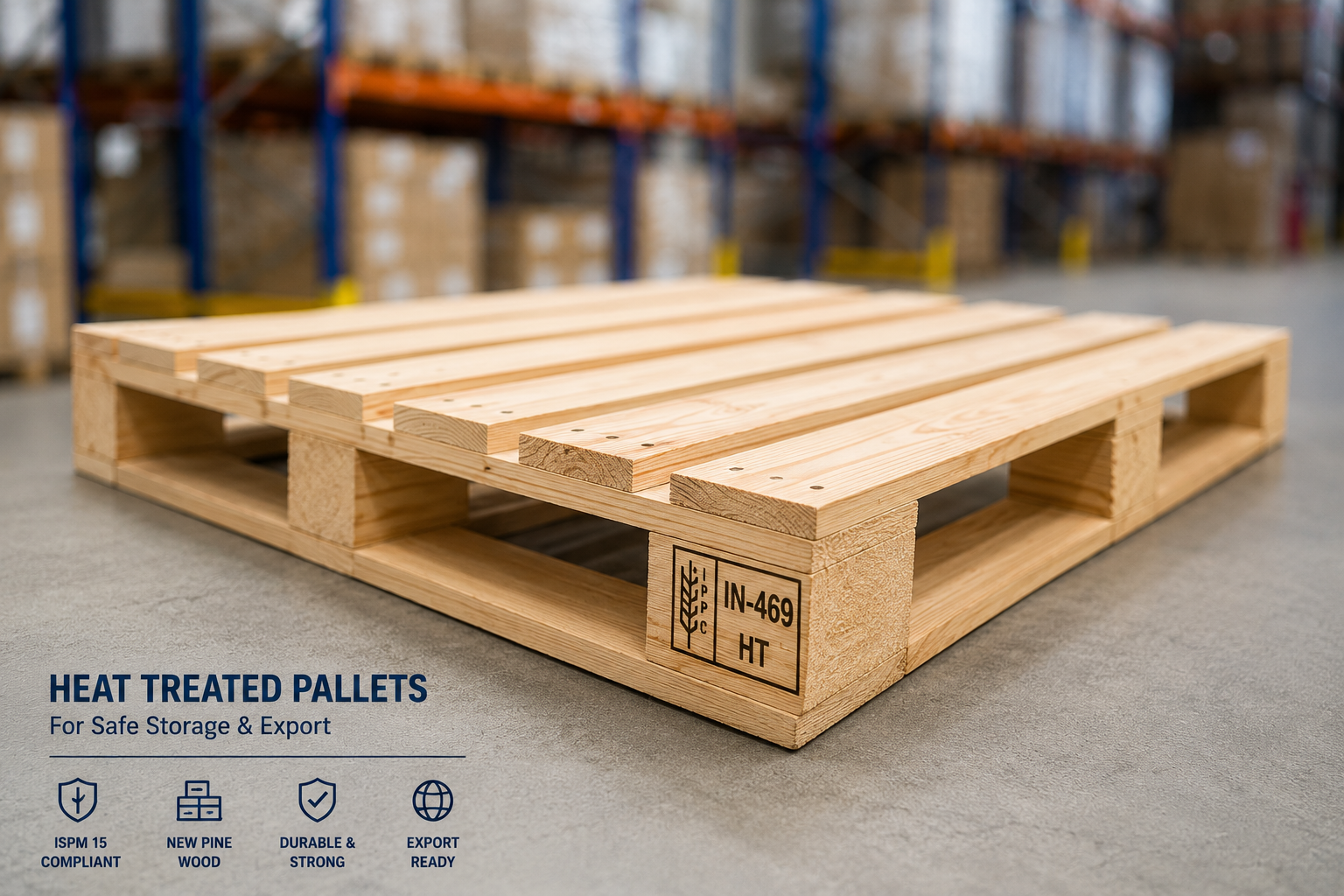
4. Wooden Pallets for Export Logistics
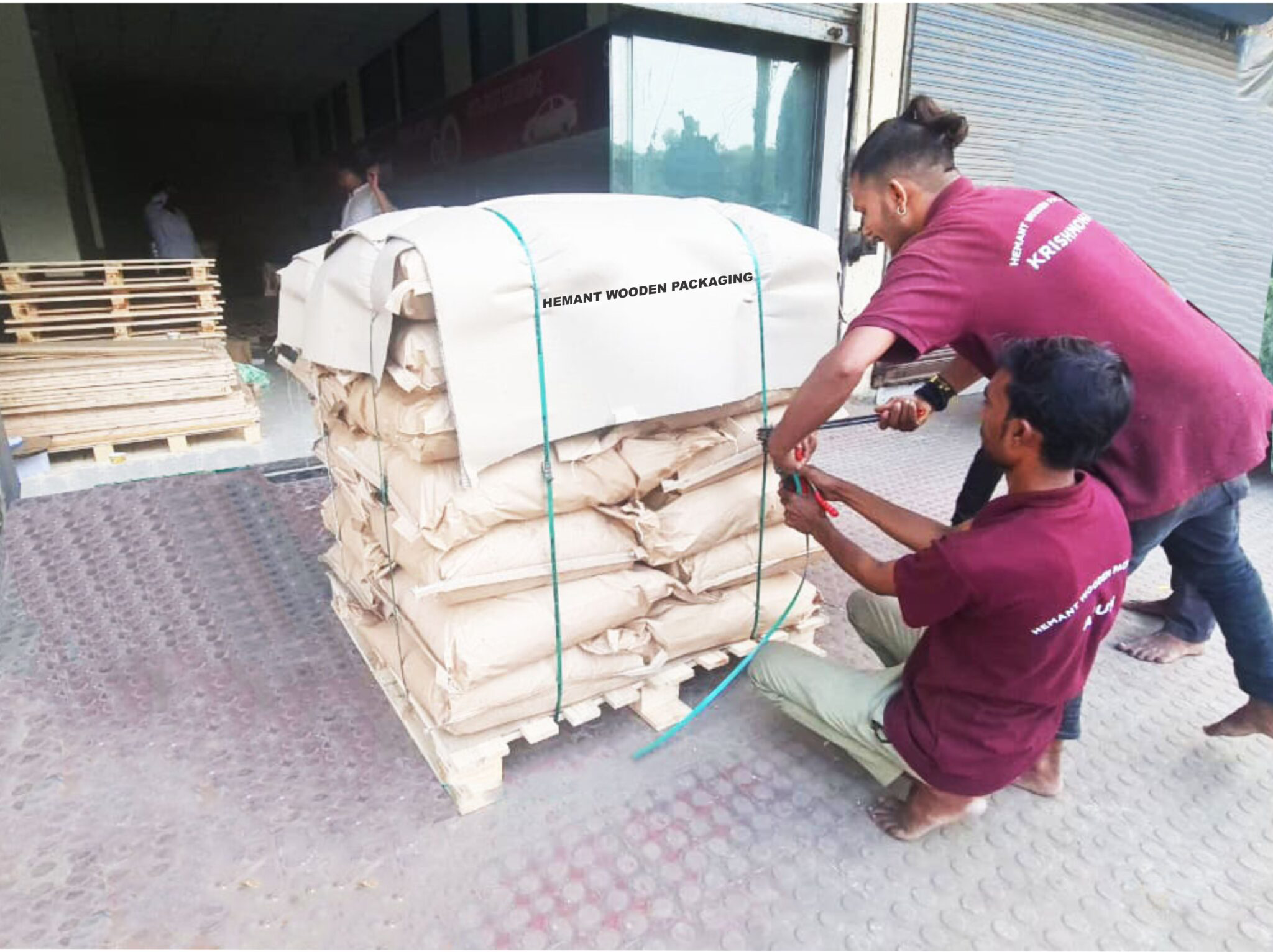
Wooden pallets are one of the most important components of modern export logistics. They provide a stable platform for storing, handling, and transporting products throughout the supply chain.
From warehouses and manufacturing plants to shipping containers and distribution centers, pallets help improve cargo movement while reducing manual handling risks.
Although pallets do not fully enclose a product like boxes or crates, they play a critical role in export packaging operations.
Wooden pallets are designed to simplify loading, unloading, stacking, storage, and container handling while protecting products from direct ground contact.
Why Exporters Use Wooden Pallets
Easy Transportation
Supports smooth forklift movement and cargo handling.
Better Storage
Improves warehouse organization and stacking efficiency.
Load Stability
Provides a stable base for packaged products.
Container Loading
Facilitates efficient export shipment preparation.
Common Applications of Export Pallets
Wooden pallets are widely used across automotive, pharmaceutical, engineering, food processing, chemicals, electrical equipment, and manufacturing industries.
They are often combined with shrink wrapping, VCI protection, lashing systems, and export packaging solutions to improve cargo security.
ISPM 15 Compliance for Export Pallets
When wooden pallets are used for international shipments, they often need to comply with heat treatment ISPM 15 requirements.
ISPM 15 treatment helps reduce the risk of pest transmission and supports smoother customs clearance for export cargo.
Export Industries Using Wooden Pallets
Automotive
Engineering
Chemicals
Manufacturing
Industry Insight
Wooden pallets may appear simple, but they are one of the most important elements of export logistics. Efficient palletization improves warehouse productivity, reduces handling time, and enhances transportation safety throughout the supply chain.
5. Plywood Boxes for Export Packaging
Plywood boxes are widely used in export industries where strength, dimensional stability, and weight optimization are important considerations.
Unlike conventional solid wood packaging, plywood boxes are manufactured using engineered wood panels, which provide consistent strength and a smoother finish.
These boxes are commonly used for machinery components, electrical equipment, engineering products, and export cargo requiring reliable protection during transportation.
Plywood boxes offer a combination of strength, durability, and weight efficiency, making them a preferred packaging option for many export-oriented industries.
Benefits of Plywood Export Boxes
Lightweight Design
Lower weight compared to many solid wood structures.
Strong Protection
Suitable for sensitive industrial products.
Dimensional Stability
Maintains shape during storage and transportation.
Export Friendly
Widely used for international shipments.
Where Plywood Boxes Are Commonly Used
Plywood packaging is commonly found in industries such as engineering, automation, electronics, medical equipment, electrical systems, and precision manufacturing.
These sectors often require packaging solutions that provide dependable protection while keeping packaging weight under control.
Typical Products Packed in Plywood Boxes
Electrical Equipment
Machine Components
Medical Equipment
Precision Products
Plywood Boxes vs Traditional Wooden Boxes
Both packaging types are widely used in export industries. The choice depends on cargo characteristics, handling requirements, transportation conditions, and project specifications.
For certain applications, plywood packaging offers weight advantages, while traditional wooden boxes may provide greater structural flexibility for heavy-duty industrial shipments.
Industry Insight
Many exporters use plywood boxes when they need a balance between strength and weight efficiency. Selecting the right packaging material ultimately depends on the product, transportation route, and level of protection required during shipment.
6. Wooden Base Packing for Oversized Cargo
Certain industrial products are too large, too heavy, or too irregular in shape to fit inside conventional wooden boxes or crates.
For such applications, wooden base packing provides a practical and reliable export packaging solution.
Instead of fully enclosing the cargo, this method focuses on creating a strong structural base while allowing customized securing, lashing, choking, and stabilization systems to be added according to shipment requirements.
Wooden base packing is commonly used when cargo dimensions exceed standard packaging limits or when equipment requires specialized handling arrangements.
Advantages of Wooden Base Packing
Supports Heavy Loads
Designed for oversized industrial cargo.
Custom Design
Built according to equipment dimensions.
Export Suitable
Widely used for international project cargo.
Secure Stabilization
Supports lashing, blocking, and choking systems.
Common Applications
Wooden base packing is frequently used for industrial machinery, transformers, pressure vessels, fabricated structures, turbines, generators, and project cargo shipments.
Many exporters combine wooden base packing with heavy machinery packaging solutions to improve transportation safety and handling efficiency.
Industries Using Wooden Base Packing
Manufacturing
Power Sector
Oil & Gas
Project Cargo
Industry Insight
For oversized export shipments, the challenge is often not packaging the cargo but securing it properly for transportation. Wooden base packing provides the flexibility needed to accommodate unique dimensions, heavy weights, and specialized handling requirements.
7. VCI Packaging, Vacuum Packaging and Export Compliance
Selecting the right outer packaging is only one part of export protection. Many industrial products also require protection against moisture, corrosion, humidity, and long transit periods.
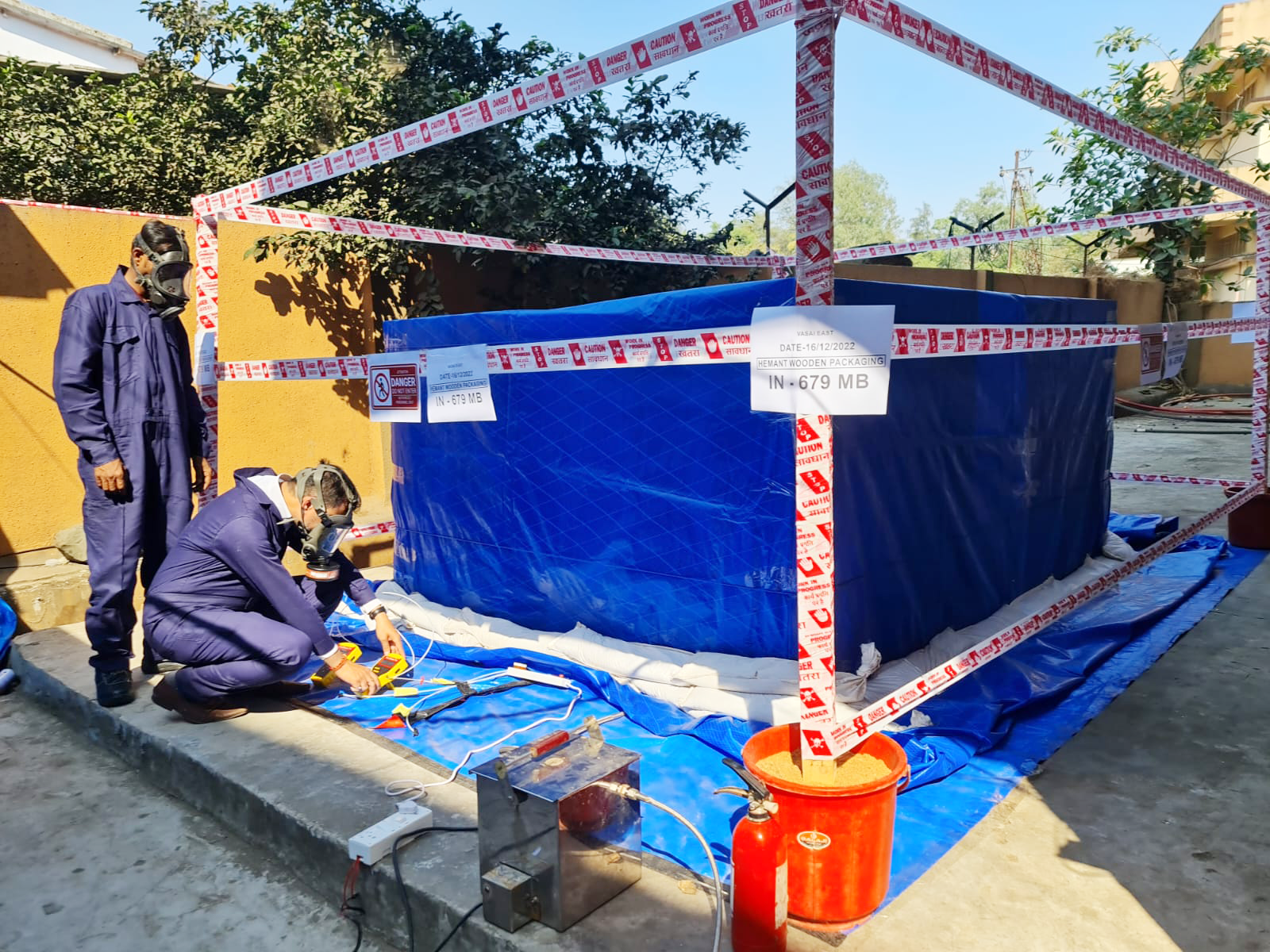
This is where VCI packaging, vacuum packaging, fumigation, and heat treatment become important components of the overall export packaging process.
For machinery, electrical equipment, fabricated components, and export cargo, internal protection is often just as important as the wooden packaging itself.
VCI Packaging for Corrosion Protection
VCI (Volatile Corrosion Inhibitor) packaging is widely used for metal components, machinery parts, and industrial equipment that may be exposed to moisture during transportation or storage.
Many exporters combine VCI protection with rubber wood boxes, wooden boxes, crates, and skid packing systems to improve cargo safety during international shipments.
Vacuum Packaging for Export Cargo
Vacuum packaging helps reduce moisture-related risks by removing excess air around the product and creating an additional protective barrier.
This method is commonly used for sensitive machinery, precision equipment, electrical systems, and high-value industrial products.
Additional Protection Methods Used in Export Packaging
VCI Protection
Corrosion prevention for metal products.
Vacuum Packing
Reduces moisture exposure.
Heat Treatment
Supports export compliance.
Fumigation
Required for many export destinations.
Export Compliance Requirements
Many countries require wood packaging materials used in international trade to comply with ISPM 15 regulations.
The standard was developed under the International Plant Protection Convention (IPPC) to reduce the spread of pests through wood packaging materials used in global trade.
To comply with export requirements, many businesses use heat treatment ISPM 15 and fumigation services before dispatching cargo internationally.
Export Compliance Checklist
Industry Insight
Successful export packaging involves more than selecting a box, crate, or skid. Compliance, corrosion protection, moisture control, and cargo stabilization all work together to ensure products arrive safely at their destination.
Which Type of Wooden Packaging Is Best for Different Industries?
Different industries have different packaging requirements. The ideal packaging solution depends on product characteristics, transportation conditions, handling methods, and export regulations.
Instead of using a single packaging approach for every shipment, exporters often select packaging based on the nature of the cargo and its destination.
The best packaging solution is the one that provides adequate protection while maintaining transportation efficiency and export compliance.
Industry-Wise Packaging Selection Guide
| Industry | Recommended Packaging | Purpose |
|---|---|---|
| Heavy Machinery | Skid Packing + Wooden Base Packing | Supports oversized and heavy cargo |
| Engineering | Wooden Boxes / Crates | Protects fabricated components |
| Electrical Equipment | Plywood Boxes + VCI Protection | Reduces moisture and handling damage |
| Automotive | Wooden Crates + Pallets | Efficient handling and storage |
| Project Cargo | Wooden Base Packing | Supports large structures and equipment |
| Export Manufacturing | Wooden Boxes + ISPM 15 Compliance | International shipment readiness |
Heavy Machinery Industry
Heavy machinery exports typically require skid packing, wooden base packing, and customized stabilization systems.
The focus is on load distribution, lifting support, and transportation safety rather than complete enclosure.
Engineering & Manufacturing Industry
Engineering products are commonly packed using wooden boxes or wooden crates depending on their dimensions and protection requirements.
These packaging systems help protect fabricated components during storage, handling, and export transportation.
Electrical & Automation Equipment
Electrical panels, automation systems, and precision equipment often require plywood boxes combined with moisture protection measures such as VCI or vacuum packaging.
The primary objective is to reduce environmental exposure and transportation-related risks.
Quick Selection Guide
Heavy Equipment
Skid Packing
General Export
Wooden Boxes
Industrial Components
Wooden Crates
Sensitive Equipment
Plywood Boxes + VCI
Industry Insight
There is no universally "best" wooden packaging type. The correct solution depends on the cargo, transportation route, handling requirements, and destination country regulations. Professional packaging planning focuses on matching the packaging system to the shipment rather than using a one-size-fits-all approach.
Conclusion
Wooden packaging plays a critical role in protecting industrial products during storage, handling, domestic transportation, and international exports.
From wooden boxes and wooden crates to skid packing, plywood boxes, wooden pallets, and wooden base packing, each packaging solution serves a specific purpose based on cargo characteristics and transportation requirements.
Understanding the various types of industrial wooden packaging helps businesses select the most effective solution for product safety, handling efficiency, and export compliance.
Key Takeaways
Export packaging is not just about enclosing a product. It involves selecting the right packaging type, ensuring cargo stability, meeting compliance requirements, and minimizing transportation risks throughout the supply chain.
Businesses that invest in proper packaging planning often experience fewer cargo damages, smoother logistics operations, and better customer satisfaction.
Final Industry Insight
The most successful export shipments are supported by the right packaging strategy. Choosing the correct wooden packaging solution can significantly improve cargo protection, handling efficiency, and export readiness while reducing long-term logistics risks.
Need customized wooden packaging for export shipments, heavy machinery, engineering products, or industrial equipment? Professional packaging planning helps ensure your cargo reaches its destination safely and efficiently.
Frequently Asked Questions (FAQs)
1. What are the main types of wooden packaging used in export industries?
The most common types of wooden packaging used in export industries include wooden boxes, wooden crates, skid packing, wooden pallets, plywood boxes, wooden base packing, VCI packaging, and vacuum packaging.
2. Which wooden packaging type is best for heavy machinery?
Heavy machinery is commonly packed using skid packing or wooden base packing because these solutions provide strong load support and allow customized stabilization systems to be added.
3. What is the difference between a wooden box and a wooden crate?
A wooden box provides complete enclosure and maximum protection, while a wooden crate offers structural support with better visibility and ventilation for inspection purposes.
4. Why are wooden pallets used in export logistics?
Wooden pallets improve cargo handling, warehouse storage, forklift movement, and container loading efficiency. They also help keep products off the ground during transportation and storage.
5. Are plywood boxes suitable for export shipments?
Yes. Plywood boxes are widely used for export shipments because they provide strength, dimensional stability, and weight efficiency for industrial products and equipment.
6. What is ISPM 15 compliance in wooden packaging?
ISPM 15 is an international standard that regulates wood packaging materials used in global trade. It requires approved treatment methods such as heat treatment to help prevent the spread of pests between countries.
7. When is wooden base packing used?
Wooden base packing is commonly used for oversized cargo, project shipments, transformers, pressure vessels, turbines, and heavy industrial equipment that cannot be packed inside standard boxes.
8. Why is VCI packaging important for exports?
VCI packaging helps protect metal products and machinery components from corrosion during transportation and long-term storage by creating a protective environment around the cargo.
9. Can different packaging methods be used together?
Yes. Many export shipments use a combination of wooden packaging, VCI protection, vacuum packing, lashing, choking, and moisture-control systems to improve cargo safety.
10. How do I choose the right wooden packaging for export cargo?
The right packaging depends on product dimensions, weight, transportation method, storage conditions, export regulations, and the level of protection required during shipment.